- Blog
- >
- Ending Your Summer Staffing Scramble Before It Starts
Last updated: May 20, 2026
Ending Your Summer Staffing Scramble Before It Starts
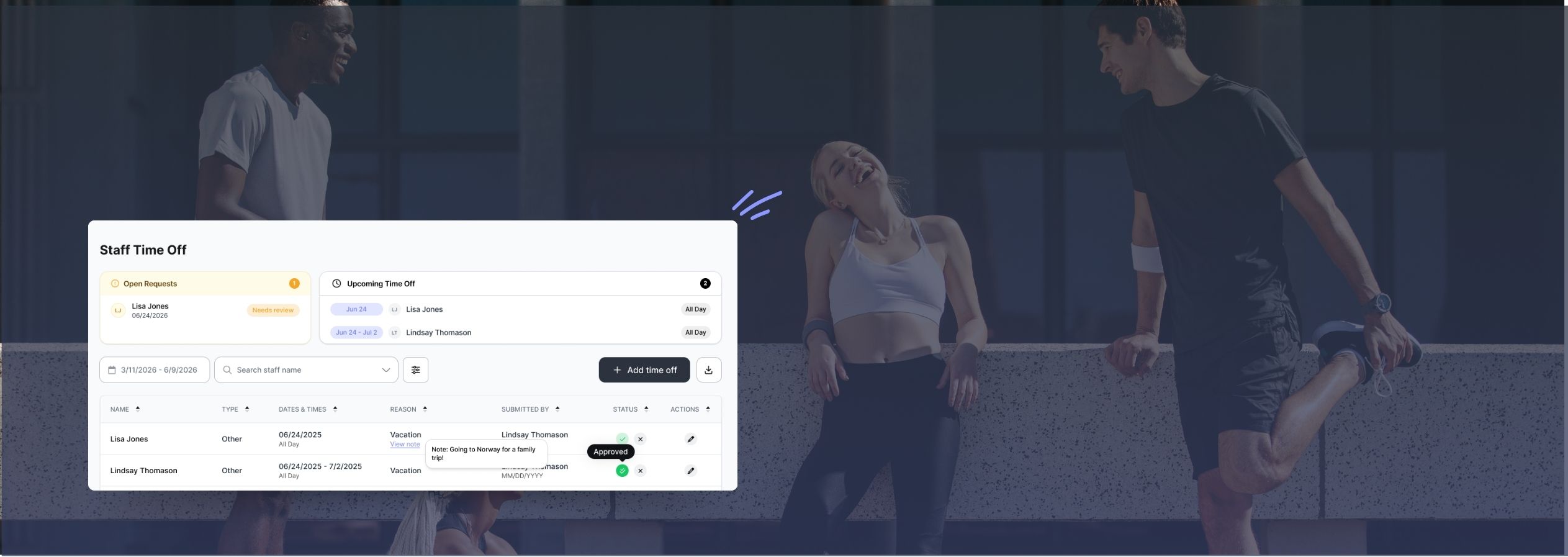
This is Part 1 of our Summer-Prep series — three articles to help you get ahead of the season before it gets ahead of you. Next up: how to turn the slow-down into revenue opportunities, and how to keep your team engaged through the whole stretch.
Profitable and relaxing summers start with great scheduling...
Every May, it happens the same way.
A few time-off requests trickle in. Then a few more. Then someone needs coverage for a shift that three people already requested off, and suddenly it’s July, you’re on vacation, and you’re still in the group chat at 9pm trying to piece together a schedule from whatever is left.
But why does this take us all by surprise every year? We know summer is coming. The problem isn’t the season, it’s that most operators are left working from a place of reactive rather than proactive and end up accidentally waiting until the requests arrive to start thinking about coverage. By then, you’re managing a crisis instead of running a business!
Getting ahead of summer starts with: visibility and intentionality. So you can enjoy your summer with minimal operational headaches and maximum business stability… and dare we say growth. Before you plan challenges, rev up promotions, or prepare for clients to potentially disappear— you need to know who’s actually going to be around from your staff.
Here’s how to build that picture before Memorial Day.
Step 1: Proactively Prompt!
The most common summer scheduling mistake isn’t allowing your team to enjoy vacations and approving too many requests — it’s not creating a system for collecting them early enough. Employees often know well in advance when they’ll need vacation days, but without a clear framework, managers end up scrambling instead of planning.
The fix is simple: set a deadline and communicate it now. Ask your team to submit any known time-off requests for June, July, and August by a set date — ideally before the end of May. Make it easy. Make it expected. And make clear that early requests get priority.
Sending a reminder at least 30 to 45 days before a major holiday or peak period, and restating your policy around deadlines for submitting requests, gives you the lead time to align schedules and prevent staffing gaps before they become emergencies.
💡Pro Tip: In NetGym, use the new time-off feature to open a submission window with a clear “submit your summer time off requests by X date.” This gets the information centralized and gives you a real picture of your coverage landscape in one place.
Not using NetGym yet? Book a Demo to learn more >
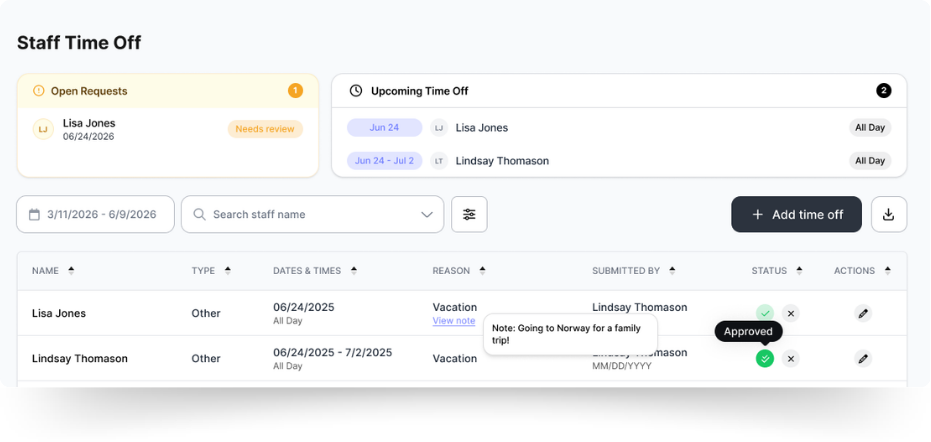
Step 2: Map Your Gaps
Once requests start coming in, the instinct is to work through them one at a time. Approve, deny, approve. But this approach means you’re making decisions in isolation and you won’t see the coverage problem until it’s already a problem.
Instead, pull everything together before you respond to a single request (this is why you gave a close date for requests to come in). Plot it out: which weeks have the most overlap? Which class modalities or formats or time slots are most at risk? Which instructors are your hardest to sub for while maintaining attendance?
For every critical role or time slot, you need at least one reliable backup — and if you don’t have one, that’s either a cross-training conversation or a scheduling flexibility conversation worth having now, not in July.
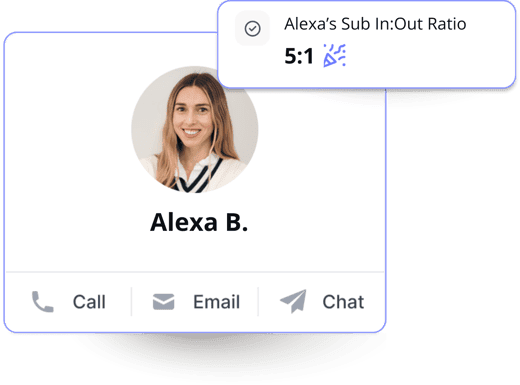
Pull up your sub bench and look at it honestly. NetGym’s insights give you a real record of who has shown up for coverage and who hasn’t — so this isn’t a gut call, it’s data. Lock in your reliable players early, and have a direct conversation with the ones who are less likely to step in. Find out what would make them more willing to.
Step 3: Document Expectations
Coverage problems in the summer are rarely just a scheduling problem. More often, they’re a communication problem that never got resolved.
Gallup research consistently points to clarity of expectations as one of the most controllable drivers of team engagement — and one of the most commonly neglected. That’s true in corporate environments and it’s true in boutique fitness studios. Your team can’t sub or cover well if they don’t know what’s expected of them when they do.
Before summer hits, make sure your sub policy is documented and accessible — not just remembered from an onboarding conversation six months ago. That means: how sub requests are submitted (through NetGym, not a text), how much notice is required, what happens when a shift or class goes uncovered, and what the expectation is around picking up available shifts or classes.
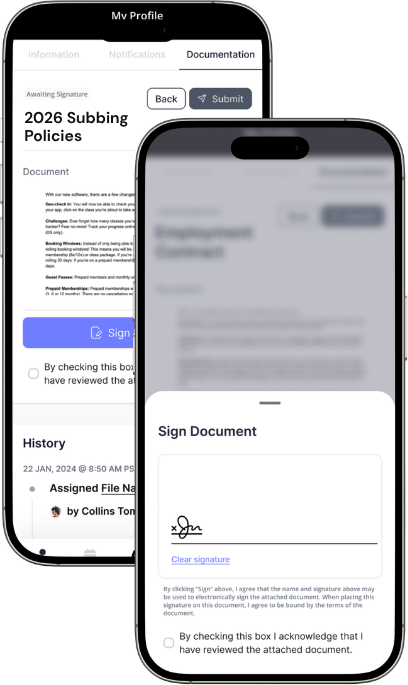
💡Pro Tip: Once your sub policy is documented, have your team sign off on it using the new E-Signatures feature so there’s no “I didn’t know” come July. Then send a post letting staff know where to find their signed copy so they can refer back to it as needed. This is what lets you enforce expectations fairly without the conversation feeling personal.
Not using NetGym yet? Book a Demo to learn more >
Step 4: Build Your Buffer
Even the most organized schedule falls apart when someone calls out unexpectedly — and in summer, unexpected callouts go up. Life is more exciting. Weddings, travel, kids’ schedules. Having a pool of reliable team members who are open to additional shifts and can be called on in a pinch is one of the most practical safeguards against summer scheduling chaos.
Identify two or three people on your team who have historically been flexible and willing to pick up shifts. Have a direct conversation with them now — before the summer — to confirm their availability and interest. Compensate or recognize that flexibility in a way that makes it worth their while.
Then make sure open classes shifts are visible (maybe even to those with “secondary skills” for the summer when subbing gets harder). If your team can’t see what’s available, they can’t claim it.
💡Pro Tip: Before summer hits have your team audit their notification settings in NetGym. Getting everyone’s notifications dialed in now means open shifts actually get seen when they go up.
The payoff
Getting your scheduling logistics locked before summer doesn’t just protect your coverage — it changes how you show up as a leader for the next three months. When you have visibility, you can make decisions. When you have documentation, you can hold expectations. And when you have a coverage buffer, you can actually enjoy the season a little instead of white-knuckling your way through it.
Once the logistics are handled, you can turn your attention to the real opportunity summer creates — and we’ll cover that in Part 2.
A Smooth Summer Starts With the Right System
NetGym gives fitness operators one place to collect time-off requests, manage the sub board, document policies, and keep their team accountable — so summer coverage stops being a crisis you react to and starts being a plan you execute.
Book a demo to see how NetGym can help you get ahead of the summer scramble.