- Blog
- >
- Why Your Team Ignores New Policies (And How to Roll Them Out Like a Marketing Campaign)
Last updated: March 26, 2026
Why Your Team Ignores New Policies (And How to Roll Them Out Like a Marketing Campaign)

Did you roll out new 2026 policies only to find your team is already breaking them? Maybe they’re even saying, “Oh… I didn’t know about that.”
It’s infuriating. It feels disrespectful. And it can make you question your sanity…
But here’s the reality: Most policy failures aren’t a result of your team wanting to be defiant! They’re a result of not effectively breaking through the noise and changing their habits.
Most biz owners are excellent at marketing to clients. You know a single Instagram post doesn’t sell a membership… One email doesn’t fill a workshop… Behavior change requires repetition, consistency, and multiple touchpoints.
Yet internally, we often treat policies like announcements and think we can “set it and forget it.”
- You post it once (maybe even in ALL CAPS)
- You mention it in a meeting (maybe even with your stern voice)
- You assume everyone is an adult and it’s understood
- You move on
But, if you want team behavior to shift, you have to treat internal communication the same way you treat client marketing.
TLDR: Shift from “New Policy Announcement” to “New Policy Campaign”
When you treat policies like announcements, you get temporary awareness and probably a few eye rolls and complaints. When you treat policies like campaigns, you get lasting behavior change.
Here’s your simple framework: Announce → Clarify → Reinforce → Recognize → Revisit
The full breakdown:
Step 1: Start With Clear, Digestible Documentation
Before you announce anything, ask yourself: Is this policy written clearly enough that someone brand new to my team could follow it without oversight?
Common mistakes:
- Policies buried inside a long employee handbook
- Long paragraphs with vague expectations
- No examples of what “good” looks like
- No clear start date or accountability check in dates
Strong policy documentation is:
- Short and specific
- Broken into bullet points and easy to scan
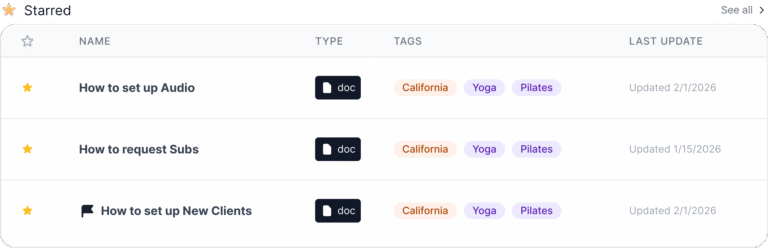
- Easy to reference later (clearly titled and labeled in your Resource Hub)
- Written in plain language
- Supported with examples
Clarity reduces confusion. Specificity reduces friction.
Step 2: Announce It Like a Campaign (Not a Singular Memo)
When launching a new policy, assume your team will not fully absorb it the first time!
Just like with clients, the old marketing adage holds true, your staff needs to hear things 7-9 times before they are ready to take action. And let’s double that for how many times they need to hear it before it becomes HABIT and on-going action.
That means a strong policy rollout includes:
- Written Documentation: Created utilizing the tips above and posted in your shared resource system (NetGym’s Resource Hub, Google Drive, Notion, etc.).
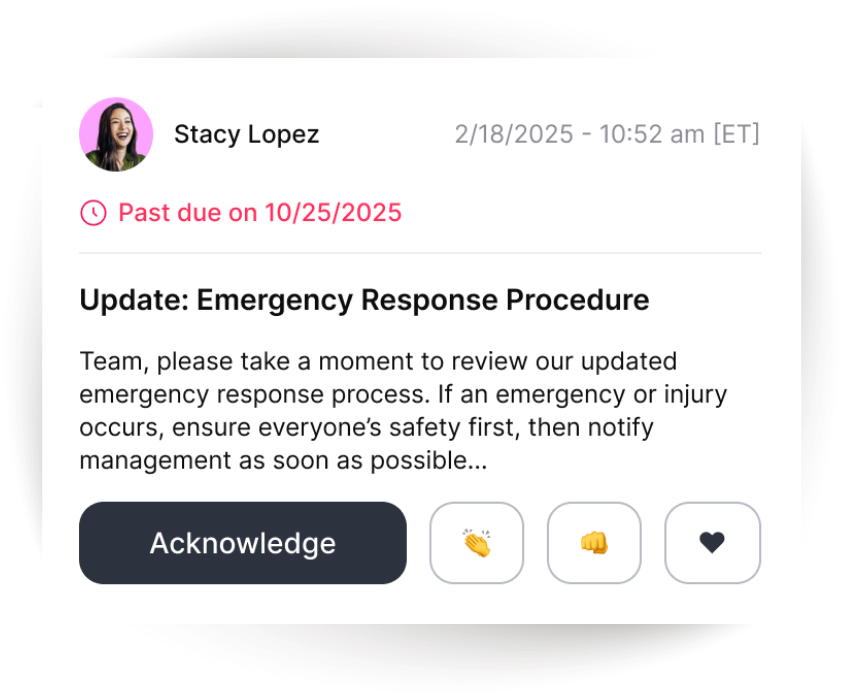
- Acknowledgement: A signed document, compliance form, or written confirmation that employees have reviewed it.
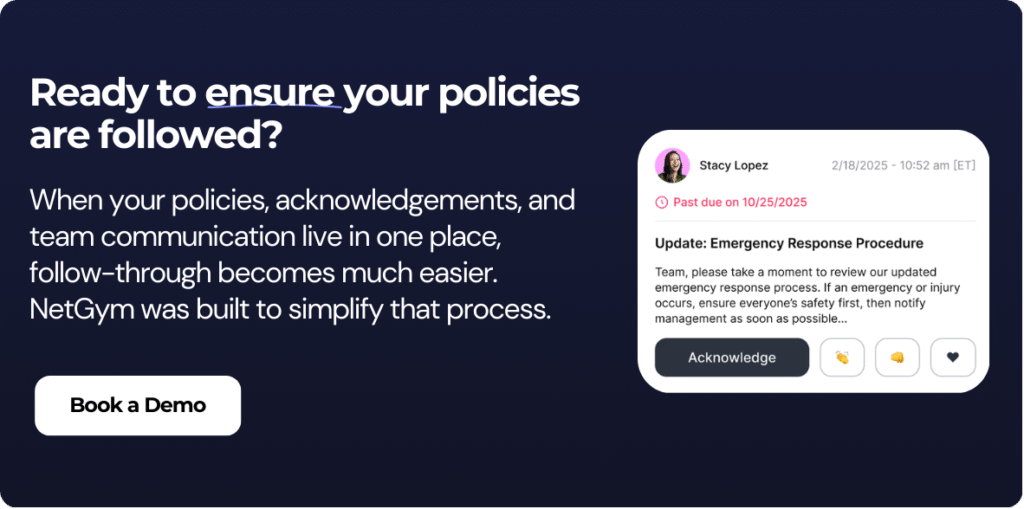
**Pro-Tip – this is the perfect use case for NetGym compliance posts! - Team Discussion: Discuss it live. Allow questions. Clarify gray areas. Most importantly…explain the “why.”
- 1:1 Reinforcement: Reference the policy in individual conversations where relevant and work check-ins on the policy into employee review agendas.
- Informal Mentions: Never underestimate the power of informal “water cooler” chat! Managers casually referencing the policy in day-to-day interactions can go a long way.
Behavior change accelerates when communication is layered.
Step 3: Reinforce for 90 Days (Minimum)
Most managers make the critical mistake of stopping talking about the policy too soon.
Repetition over time is required for new behaviors to become automatic and habitual! Announcing something once, even clearly, just isn’t enough. Especially given the information overload that we all live in in 2026!
Build a 90-day reinforcement window that might include:
- Scheduled reminder posts at 30, 60, and 90 days (NetGym posts work great here)
- Quick check-ins during future team meetings
- Polls or quizzes to confirm understanding
- Sharing tips for how to hold to the policy or meet expectations
- Highlighting team members modeling the behavior
The goal is not to nag. BUT the goal is to normalize and train. When something is referenced consistently over time, it stops feeling like a “new rule I have to try to remember” and starts feeling like “this is just how we operate.”
Step 4: Show What “Good” Looks Like (Don’t Just Correct Violations)
Policies fail when they stay theoretical or feel like punishment. If you want behavior change, show positive examples and give best practices.
For example, if you introduce a new sub request policy:
- Share best practices for how to motivate your peers to step up and help you out
- Highlight a fast response turnaround by a team member
- Publicly recognize someone who followed the process well
Behavior spreads faster when it’s visible and seen through a positive lens! Many managers only reference policies when someone violates them. This creates an association between policies and punishment.
When you flip to the positive, over time, your team stops seeing policies as restrictions and starts seeing them as shared standards.
"When you flip to the positive, over time, your team stops seeing policies as restrictions and starts seeing them as shared standards."
Step 5: Revisit During Reviews & Feedback Conversations
Use performance reviews and feedback sessions to ensure your most important policies are continually discussed and:
- Re-anchor expectations
- Clarify misunderstandings
- Reset consistency
- Identify friction points
If multiple people are struggling with the same policy, that’s probably not individual failure, that may be something for you and your management team to revisit (either WHAT the policy is or HOW it’s communicated).
Strong leaders adjust systems instead of repeatedly blaming people.
Why This Matters More Than You Think
In fitness, culture and consistency are everything. Policies aren’t about control, they’re about clarity and that stability directly impacts retention, both client and instructor. When internal systems are chaotic or policies ignored, clients can tell…