- Blog
- >
- Fall Prep Starts Now, and It Starts With Your Clients
Last updated: July 21, 2026
Fall Prep Starts Now, and It Starts With Your Clients
Getting fall-ready doesn't start with scheduling. It starts with finding out what your clients actually want, and setting your team up to help you crowdsource a temperature check.
A few months ago, our summer prep advice started with your team: find out their availability and unavailability, lock in coverage, and build from there. That’s because summer typically faces a supply problem, so you solve it supply-first.
Fall is different, so you prep differently. September doesn’t tend to have an issue with who’s available to teach or work the desk. Your team is hopefully eager to get back to consistency, especially if they know that means full schedules and a poppin’ studio. It’s your clients you have to strategically guide: make sure they’re ready to come back, find out when they want to come back, and help them get back into a routine quickly based on whatever scheduling restrictions they’re facing this year. So fall prep runs the other direction. You start by sussing out demand first.
Fall prep is a four-part sequence: first you understand what your clients want (bonus: it doubles as low-pressure re-engagement with them post-summer), then you find out your team’s availability and preferences, then you combine the client feedback and team availability into a killer schedule, and finally you dive into a segmented client outreach plan to fill those spots.
This piece is all about step one (the rest is coming soon…), and it’s a two-week sprint, not a season-long project. This step is a low-pressure listening exercise, not a marketing push, but the payoff is real: you gather up-to-date demand data before you build a single class time, while re-engaging clients who fell off over the summer and keeping the ones still coming in excited for fall and feeling special to be part of the build. We love killing multiple birds with one stone.
You’re gathering demand from three groups of clients, and each one needs a different kind of touch. Start with the people already walking through your door…
Here’s how to set those re-engagement conversations up so they actually produce something you can use.
First, the Clients Already in the Room: Your Active Members
The "Formal" In-Person Conversations
The best demand data won’t come from a survey blast. It comes from your front desk and instructors talking to clients face to face. In-person conversations unlock what a form never will: the real schedule and frequency a client wants, the hesitation and lack of confidence around actually maintaining that consistency, the offhand comment that they’d bump up to three times a week in the fall if you ran a 6am, the mention of the bestie who’d be their accountability buddy if they booked too.
The trick is getting your team fully involved in having those conversations, tooled up with the right questions to ask and a clean way to capture all of it, instead of losing it in people’s heads or in fragmented notes scattered across client profiles in your member management system.
⚡Action to Take:
Give your team a simple Google Form or Typeform to complete right after a client conversation, so every bit of intel lands in one place. Use a mix of yes/no and multiple-choice questions with clear answers, plus open notes you can feed into your AI of choice later to synthesize across the board.
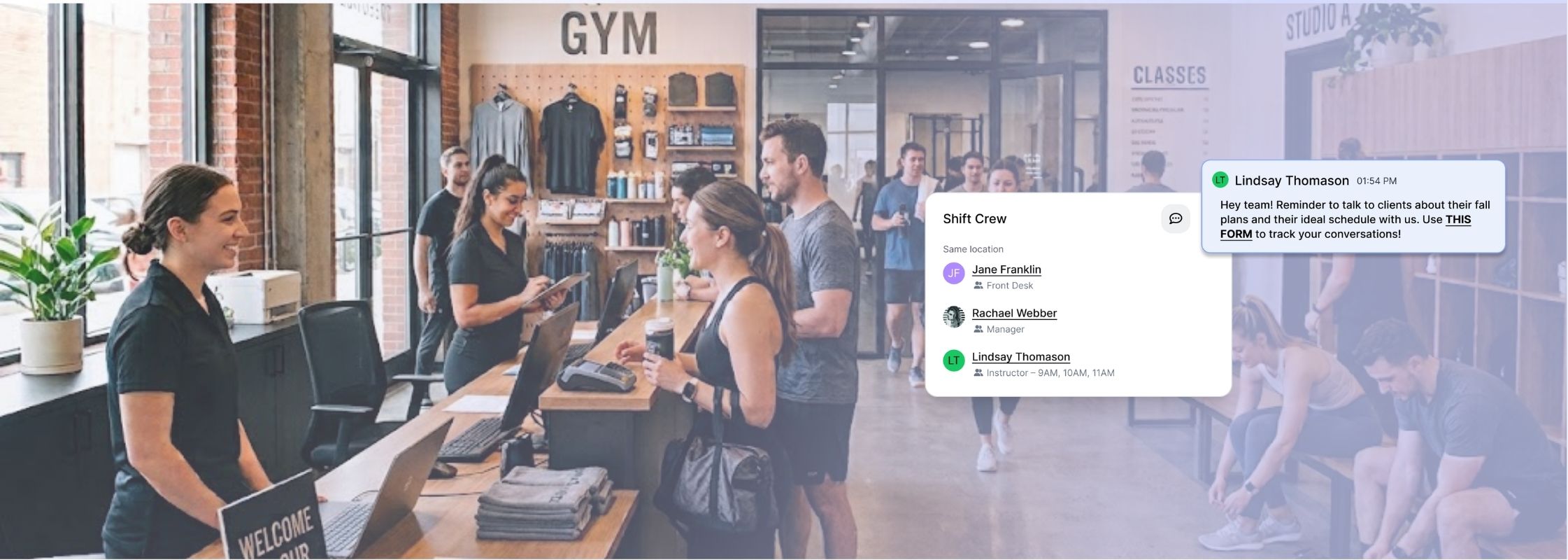
Then use shift notes in NetGym to link the form and remind every shift over the next two weeks to talk to as many clients as possible and log what they hear.
The "Overheard in the Studio" Intel
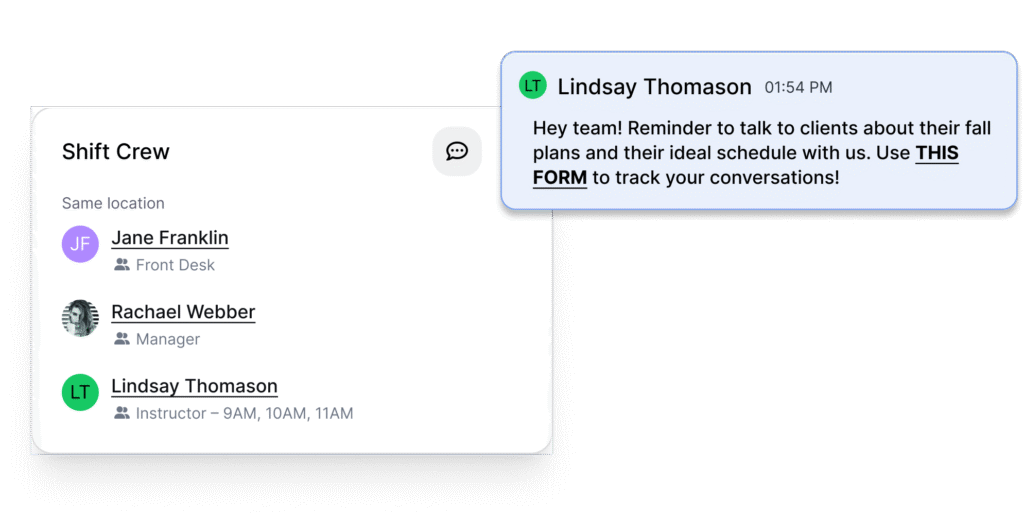
Not everything worth knowing comes from a formal ask. Your team picks things up all the time that you probably don’t get to hear: who’s traveling, who mentioned coming back once school starts, how many people are consistently five minutes late to the 7am so maybe a 7:15 would serve them better. They won’t get every client to sit for a few-minute conversation to enable them to complete the fall survey, but those observations still deserve a home. Open a fall prep channel where the team can drop them in real time: clients they’ve missed who are worth reaching out to, formats people keep asking about, anything they’ve heard.
It turns hallway intel into a running list you can actually use when you build the plan, instead of a dozen half-remembered comments that never make it out of the studio.
#overheard-in-the-studio-fall-prep-edition
⚡Bonus Action:
When you go to build your fall schedule, you can copy the whole channel into your AI of choice, ask it to synthesize the findings and spin up a matching to-do list (client outreach and all), then build your schedule with that knowledge and drop the to-dos into a task board in NetGym.
Next, the Ones on Pause: Your Frozen Clients
These are the clients you already know are coming back, at least on paper. They asked to freeze a package or membership, which means you have two things making life even easier for you: a warm relationship and a built-in reason to reach out.
This group doesn’t need a survey blast. It needs a personal touch. Assign 1:1 outreach to your front desk team or sales associates, give each of them a list, and have them reach out individually to remind clients when their package or membership reactivates and invite them to either fill out the fall survey or hop on a quick call about what they want fall to look like.
Make it a sequence, not a one-and-done. Something like a phone call first, an email a few days later if you don’t connect, then one more nudge after that. Whatever cadence fits your studio, write it down. Turn it into a simple SOP so every team member runs the same play the same way, and drop it in your resource library (in NetGym of course) so it’s ready to reuse this fall and every season after. A documented reactivation sequence is an asset you’ll lean on long past this September.
💡Pro Tip:
Have your team frame the phone call as a “consultation call” to help the client prep to reach their fall goals and get their top picks on class times.
Last But Not Least, Everyone Else: Your Inactive Clients
For the clients who’ve fully drifted, and honestly for anyone your team doesn’t reach one-to-one, send the fall request survey out as a marketing email. But don’t frame it as “we miss you, please come back.” Frame it as “help us build the fall of your dreams.”
People love being asked for their opinion, and an invitation to shape the fall schedule feels a lot better than starting with a win-back pitch. Tell them you’re planning fall around what your community actually wants, and their input helps decide what makes the schedule. It’s a softer re-entry for the ones who’ve been away, and it makes your clients feel like insiders in the build.
💡Pro Tip:
Keep the survey identical to the one your team is completing from their in-person conversations, so every response feeds into the same place when it’s time to synthesize.
Bringing it All Together: Get Your Team Bought In
Give everyone a heads up that fall scheduling work begins now. Send a compliance post letting your team know you’ll be polling clients on demand over the next couple of weeks, how they can get involved now to help shape what fall looks like (the in-person conversations and the overheard-in-the-studio channel), and that they should start thinking about their own fall availability so they’re ready to confirm and update it when you ask for it in the next step.
It sets expectations, gets acknowledgment on the record, and means nobody’s caught off guard when the schedule conversation comes up in a week or two.
⚡Bonus Action:
Add a “completed by” field to the client survey so you know who on your team had each conversation. Start a friendly challenge to see who can have the most substantive client conversations (real ones only, no box-checking), and celebrate the people getting involved. This ties straight back to our summer conversation on team engagement: give your team small wins to hit, celebrate them often, and look for the unique things worth celebrating that show how engaged your people are, not just how full their classes are.
Keeping Everything Organized
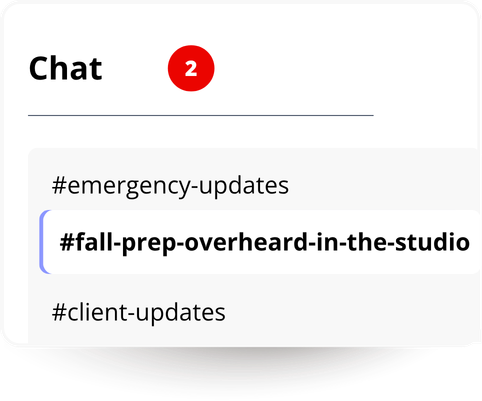
Give the whole effort a place to live so step one doesn’t stall out. Create a fall prep project in NetGym’s Task Management and load it with the logistical first moves: build the client survey with your leadership team, task your team with segmenting your client list into active, frozen, and inactive, and sketch out the outreach plan those segments will drive.
Assign each piece an owner and a due date. This is where NetGym earns its keep on fall prep: the internal work, the tasks, the coordination, the follow-through that keeps the plan moving. The client outreach itself can run wherever you already manage client relationships, whether that’s your member management system or a tool like Loyalsnap or Xplor Growth.
Setting a Timeline: Make the Next Two Weeks Count
This step is a sprint, not a season-long project. Give it two weeks and put a finish line on it, because an open-ended “we’re collecting feedback” fizzles, while a tight window with a deadline gets your team moving and hands you a clean set of data to build from.
Week one is launch. Send the compliance post, brief your team on the questions to ask, get the in-person conversations going, hand your front desk their frozen-client lists, and send the survey to everyone else. Get all three channels live.
Week two is keep gathering and nudge. Keep the conversations going and use shift notes to remind each shift, watch the overheard channel fill up, follow up on frozen clients who haven’t responded per your SOP, and start synthesizing what’s coming in. At the end of week two, you close the window and move to building.
Why Step One Matters
Once the conversations are happening and the intel is coming in, you’ll have something far better than a hunch to build your schedule around: a real read on what your clients want this fall, broken out by the segments that matter. From here, step two is turning to your own team to gather their fall availability and preferences, so you can combine both sides into a schedule that actually fits.
For now, the entire job is this. Get your team talking to clients, and give them a clean way to capture what they hear. The schedule comes later, and it comes out a whole lot better when your clients helped write it.
Want to Involve Your Entire Team in Fall Prep?
See how NetGym keeps every conversation, channel, and task organized behind the scenes, so nothing your clients tell you slips through the cracks. Give your whole team a clear role in the build and head into fall with a schedule shaped by real demand.