- Blog
- >
- Staff Engagement Is Your Most Underrated Summer Retention Tool
Last updated: June 1, 2026
Staff Engagement Is Your Most Underrated Summer Retention Tool
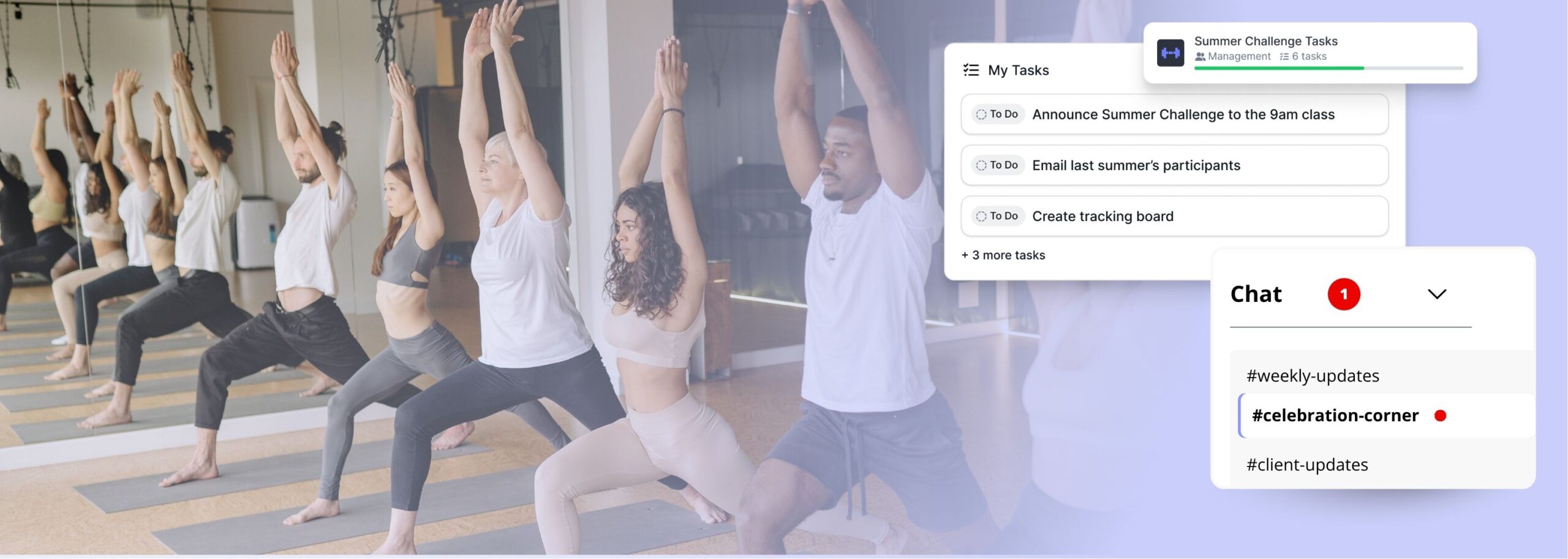
This is Part 3 of our Summer-Prep series — three articles to help you get ahead of the season before it gets ahead of you. If you’re just joining us, start with Part 1 (Ending Your Summer Staffing Scramble Before It Starts) and Part 2 (Turn the Summer Slow-Down Into a Frequency Push). This one’s about the piece most fitness operators miss — keeping your team engaged so your clients stay that way too.
A disengaged team might not show up in your metrics until it shows up in your client experience...
You’ve sorted the staff logistics with scheduling. You’ve built the client engagement tool, a killer challenge. You’ve given your team a role in planning it. And now it’s June, the summer is officially underway, and there are ten weeks between you and Labor Day.
What will hold everything together for that time?! Engagement and buy-in from your team.
Here’s what most fitness operators know but assume there’s nothing to do about: staff engagement dips in the summer just like client engagement. The impact on your bottom line is less direct, so it’s easier to write off as just part of the season— but it still comes through. Slower response times on coverage requests. Less energy in the studio. A little less investment in the small things that make the client experience feel special. The distraction and forgetting to talk to new clients about ongoing membership options or existing clients about the upcoming challenge.
It makes sense. Summer pulls everyone toward a looser routine and mindset. Your team members have their own vacations, their own routines disrupted, their own version of the seasonal pull. And if you’re not actively managing their engagement through this stretch, you’re likely to find yourself in September with a client experience problem that actually started as a team problem in July.
The good news is that keeping your team engaged over the summer doesn’t require a big program or a budget. It requires consistency and being proactive in a few specific places. Here’s where to focus.
Start With The Distinction That Matters
There’s a difference between staff satisfaction and staff engagement — and summer is when that gap tends to show up most clearly.
A satisfied employee shows up, does their job reasonably well, and doesn’t complain. An engaged employee is emotionally invested in the business and its outcomes. They go the extra step with a client. They pick up a shift when it’s inconvenient. They care whether the challenge lands.
Gallup’s research shows that the primary drivers of disengagement are lack of recognition, unclear role expectations, and ineffective communication — and that the slide from not engaged to actively disengaged happens gradually, making it easy to miss until it becomes a real problem.
Summer doesn’t create disengagement. It just accelerates whatever was already there. Which means the moves you make in June matter more than they might seem.
Step 1: Keep the Communication Cadence, Even If It Feels Unnecessary
The most common summer management mistake isn’t one big mistake — it’s a subtle and slow pull back and relax. Meetings get skipped because everyone’s schedules are patchy. Check-ins get pushed because things seem fine. Communication becomes reactive instead of intentional.
Gallup research consistently finds that employees are significantly more likely to be engaged when they receive regular feedback from their manager — and that the quality and consistency of that communication matters as much as its frequency.
This doesn’t need to always look like formal performance reviews. It can look like a quick team check in at the start of each week sharing what’s coming up, what’s going well, and what needs attention. It can look like a brief 1:1 check-in with team members once or twice a month — not to evaluate them, but to stay connected. It looks like using your team communication channel in NetGym consistently so that no one feels like they’re guessing what’s happening in the business.
The managers that hold team engagement through the summer aren’t doing anything extraordinary. They’re just not letting the season be an excuse to stop doing the ordinary things well.

💡Pro Tip: Create a dedicated team channel in NetGym for your weekly check-ins — something like #team-standup or #weekly-updates. A quick post every Monday with what’s coming up, what’s going well, and one thing that needs attention takes five minutes and gives your team a reliable pulse point all summer long. Consistency in the channel builds the habit on both sides.
Step 2: Make Progress Visible and Celebrate Small Wins
Summer is a season of relaxed energy. Goals that felt clear in spring start to blur when half your team is rotating in and out of vacation schedules or just in vacation mindset mode. One of the simplest and most effective things you can do as a manager is keep the team’s attention on concrete, short-term wins.
HBR research found that everyday progress — even a small win — can make a meaningful difference in how employees feel and perform, and that the power of progress is fundamental to human nature but rarely leveraged intentionally by managers.
What does this mean in practice for you? Naming wins regularly and specifically. Not just “great job everyone” — but calling out a staff member who covered a shift last-minute, acknowledging a milestone in the challenge sign-ups, sharing when a new client converts to a membership. Employees recognized consistently are significantly more likely to be highly engaged — and it doesn’t have to be complicated or involve gifts to land.
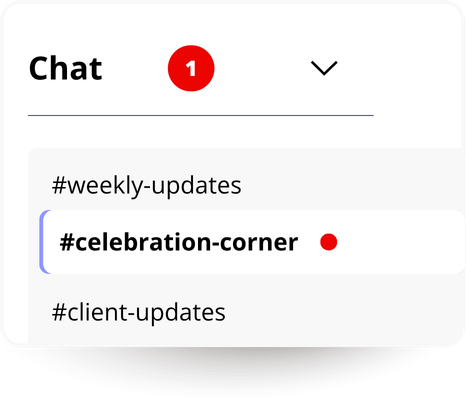
💡Pro Tip: If you don’t already have one, try setting up a #celebration-corner channel or something of the like in NetGym! A quick post celebrating a coverage win or a challenge milestone takes two minutes and does real work for team morale. Make it a habit, not an afterthought.
Step 3: Give Your Team A Short-Term Goal That Isn't Just About Covering Shifts
Scheduling and coverage dominate manager-staff communication in the summer, which means most of your team’s interactions with leadership are transactional. Someone needs something covered. Someone is requesting time off.
When every touchpoint is operational, the work starts to feel that way too. One of the most effective things you can do to counter the summer drift is give your team something to collectively aim for that isn’t coverage-related.
The challenge you built in Part 2 is one version of this — a shared goal the team helped create and has real stakes in. But you can layer in smaller ones too. A team KPI around new client conversations. A sub board response time goal. A recognition challenge for the team member who most improves their utilization rate. Celebrating progress along the way — not just at the finish line — sustains motivation and keeps team members working toward something beyond just getting through the week.
Short-term goals work in summer because they have a finish line people can actually see. A quarter long revenue goal feels abstract to the people on the ground. A four-week challenge metric is real.
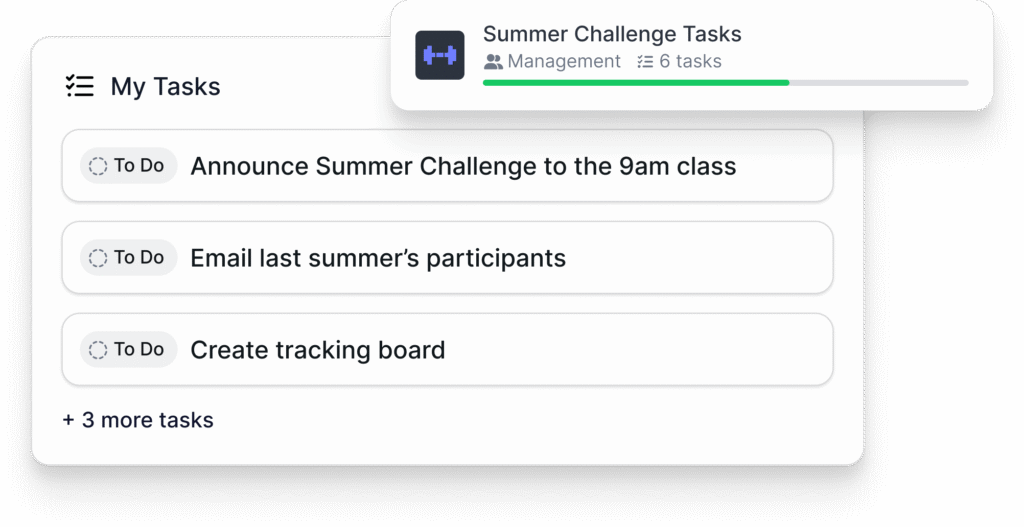
💡Pro Tip: Use NetGym Tasks to make your short-term team goals visible and trackable. Whether it’s a new client conversation target or personally reaching out to X clients to invite them into the summer challenge, building it out as a Task keeps it from living only in someone’s head or a meeting that already happened. Assign it, set a deadline, and check progress together — that’s what turns a goal into something the team actually works toward.
Step 4: Don't Let The Casual Slide Into Disconnected
Summer invites informality, and that’s not a bad thing. Letting pre-meeting conversations breathe a little, having a team picnic, keeping the tone lighter — all of this is healthy and appropriate for the season.
What’s not healthy is when informality becomes a substitute for actual connection. A fun team event doesn’t replace a check-in. A casual group chat doesn’t replace clarity about expectations. Gallup’s research identifies clear, honest, and consistent communication from leaders as one of the most frequently cited unmet needs across the workforce.
Use the summer’s lighter pace as permission to be a little more human with your team, not as an excuse to go quiet on expectations. The studios and gyms that come out of summer with a strong, engaged team are the ones where the manager stayed present even when it would have been easy not to.
You've Built The Plan. Now Execute It.
If you’ve followed this series from Part 1, you’ve done the hard work ahead of the season. You have your scheduling visibility locked down. You have a challenge built with your team’s input. And now you have a clear picture of what it actually takes to keep them engaged through the stretch.
That’s not a small thing. Most studios get to August wishing they’d planned ahead in May.
You did. Now go enjoy what you’ve built!
A Strong Summer Starts With an Engaged Team
Your clients feel your team before they feel anything else. NetGym gives fitness operators one place to keep communication consistent, goals visible, and wins celebrated — so your team stays engaged and your clients stay too.
Book a demo to see how NetGym supports your team all summer long.